Celebrating 50 episodes of the My Favourite Podcast with Clive Sawkins
Episode 50 - Clive Sawkins
Consistency is a culture problem, not a technology problem
For the 50th episode of My Favourite CX I wanted to do something a bit different, so we did it in person — in the new Holt CX office, still smelling of paint and echoing like a swimming pool — with Clive Sawkins, Chief Executive Officer at Digital Barriers.
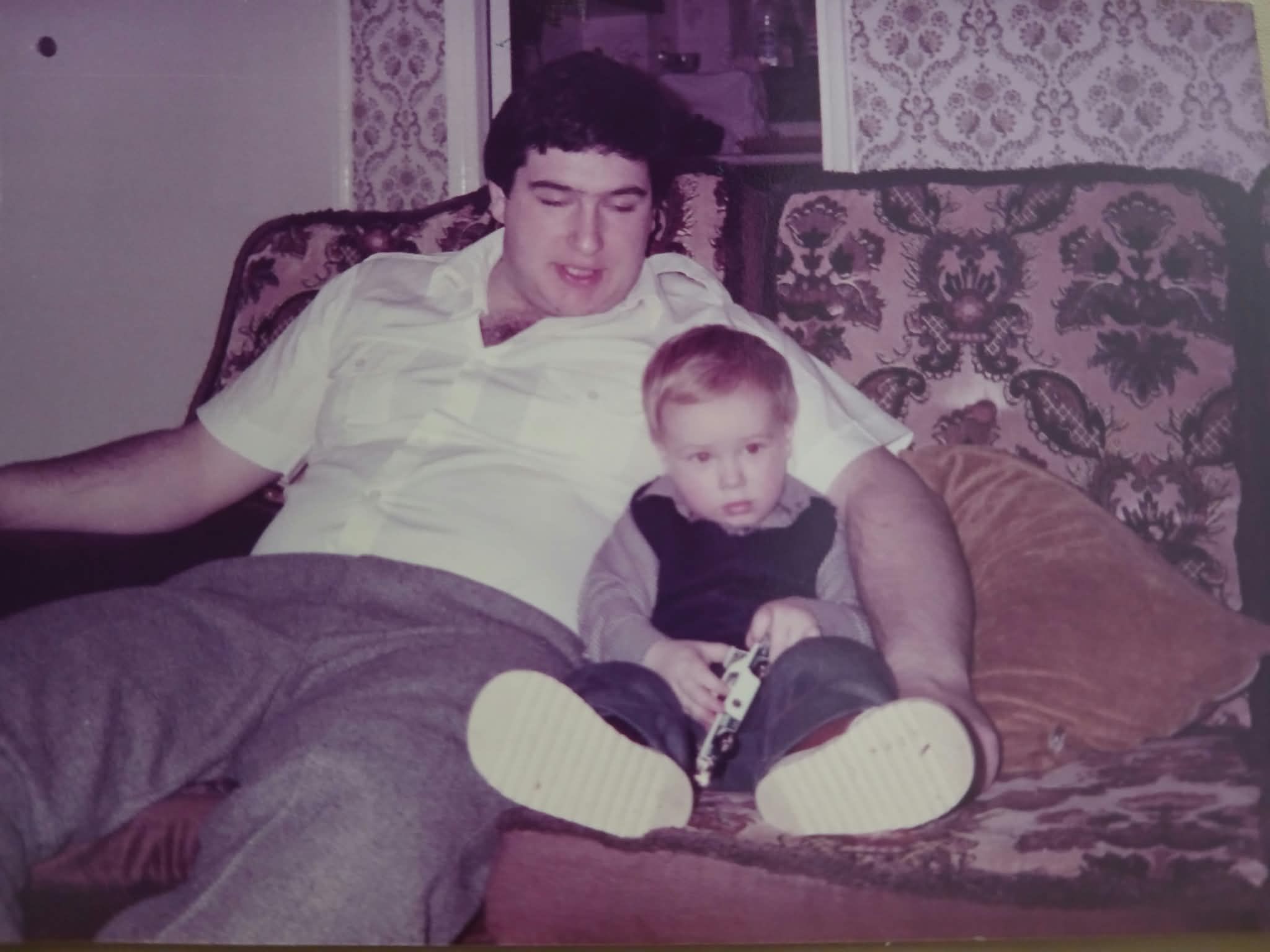
Clive is a large part of the reason I'm in this industry at all. There are photographs of me sat on his knee in the eighties, surrounded by patterns the decade should apologise for, and when I was a sandwich student with an aerospace degree and a collapsing aerospace industry, he was the one who said let's see if an Avaya business partner will take you on. Nortel, Aspect, Rockwell, Unisys, Avaya, Cisco, the business he built and sold to New Era Technology, and now Digital Barriers — he has watched this industry reinvent itself about six times.
Which makes it worth paying attention when he says the thing underneath it never actually changes.
"Whether you're dealing with network architecture, security, building the latest and greatest contact centre or AI chatbot experience, it all has to start and end with the customer experience," he said. "Otherwise, what's the point?" And then, flatly: "Technology for technology's sake has never, ever been a reason for implementing this stuff."
We spent the next hour circling what actually produces a good experience, and it was almost never the technology. It was whether the people delivering it had been given the culture and the permission to care.
Stop measuring the moment, start measuring the loyalty
Clive's sharpest point of the episode was about measurement, and it will make uncomfortable reading for anyone whose dashboard is built on post-transaction surveys.
"There's no point asking someone what their experience was like at the checkout," he said. "It's a moment of time that could have been good or bad."
What you're really trying to measure is the length of their loyalty with your brand. That's the most important thing.
— Clive Sawkins, CEO at Digital Barriers
His view is that the one-to-ten star request after every delivery has stopped telling anyone anything. The hit rates are low, the people who do respond are rarely representative, and all it does is take another ten minutes out of a customer's day that they didn't want to give. The data comes back meaningless and the business congratulates itself on having a voice of the customer programme.
What he thinks brands misunderstand is where loyalty is actually tested. If a service has been good for a long time, customers will tolerate a bump in the road — they expect one. What they're watching is the recovery. That's the moment the brand gets graded, and it's almost never the moment anyone sends a survey about.
I recognised it immediately. We've used the same supermarket for home delivery for years because they rarely get it wrong, and I've churned through three or four pet food suppliers in the same period because when they get it wrong, nothing happens next. No survey ever captured either decision.
Clive's replacement question is disarmingly simple, and he's right that it has quietly fallen out of our vocabulary: have I just pleased the person who had an interaction with me? If you can measure that, you're probably pointing in the right direction.
Goodwood, and everything that could go wrong
When I asked for his favourite customer experience, Clive didn't pick a tech brand. He picked Goodwood.
He's a member of the Goodwood Road Racing Club and has been going to the Festival of Speed and the members' meeting for years, and his reason for choosing it wasn't nostalgia. It was that Goodwood has every structural reason to be inconsistent and somehow isn't.
Run through what they're managing. It's outdoors, so the weather is not theirs to control and the experience can change character between Friday and Sunday. There's a huge influx and outflux of people to move. There's catering at scale. There's an enormous temporary workforce — and the public interacts with those temporary staff more than with anyone else on the site. And underneath all of it is a genuinely dangerous event that has to be run safely.
Every one of those is a variable that could wreck the experience. "Whoever trains them, tells them what the belief is, tells them how to act, tells them how to interact with the public, in my opinion is doing a great job," Clive said, "because over the years, it's consistently been brilliant."
That's the bit worth stealing. Goodwood's achievement isn't a single brilliant day. It's that someone has worked out how to put a temporary workforce on brand, repeatedly, under conditions they don't control. Most contact centres are managing fewer variables than that and achieving less consistency.
He also admitted he questions the ticket price every single time he buys, and goes anyway, because he knows that on the day it won't matter. That's loyalty doing exactly what he described earlier — absorbing a negative because the pattern has earned the benefit of the doubt.
Matthew on platform one
I broke my own rule and told a story of my own, because it happened the week before we recorded.
I was in Glasgow when the air traffic control problems hit. Flights cancelled, a big event on in the city, no hotels. A friend put me up for the night, I moved my flight and booked a train home instead — four and a half hours, first class, and I got to Central early because my mother taught me to get everywhere early in case the worst happens.
At platform one I recognised the body language. Same as the airport. Cancelled.
Customer service sorted me a seat on the service an hour later, and the chap dealing with me — Matthew — walked me round to the lounge himself when my access wouldn't work. I was on the phone to Georgia explaining I'd be home at eleven rather than ten when he reappeared. My first instinct was that I'd done something wrong. Instead he told me the original train had been reinstated and asked if I wanted to get on it, then walked me to it.
I got home at the time I'd originally expected to. By that point in the day I badly needed one thing to go right, and Matthew went and found me to make it happen.
Nobody's process document contains "go and find the bloke in the lounge". That only happens if someone has been given the latitude to decide it's worth doing.
The culture that produces the Matthews
Clive's answer to how you manufacture that is a set of rules he's carried through every business he's run.
First, employ people who are better than you — smarter, more knowledgeable — and don't be frightened of it. You get where you're going faster and the business grows.
Second: "Don't be scared of making a mistake, but please don't make it twice." He pairs that with a caveat most people skip — if you're going to let people make mistakes, put the controls in place that stop a mistake travelling too far. Permission without guardrails isn't empowerment, it's abdication.
Third, and the one I keep thinking about, is the decision test he's given teams at Avaya, at Cisco and everywhere since. Before you decide, ask yourself what decision I would make. Not so people can copy him, but because the question forces them to think like someone running the business for a second — am I giving this away for the right reason? — and then get on and decide it themselves.
He's equally clear about where this gets destroyed. Cultural integration is one of the first things cut from an acquisition budget, and then everyone is surprised when two organisations spend two years looking inwards and fighting each other. An inward-facing business, in his experience, never has its customer experience where it needs to be. The energy is all pointed the wrong way.
Where this leaves us
Fifty episodes in, this one landed somewhere I didn't expect. Goodwood and Matthew are the same story told at different scales — a set of people who knew what good looked like and were trusted to deliver it without checking first.
So two questions worth taking into your own operation. Could one of your people do what Matthew did, or would the system stop them? And are you measuring the moment, or the loyalty?
If it's the moment, Clive would tell you you're measuring the wrong thing entirely.
Where to find the episode?
Check out our YouTube channel, Spotify, Apple or wherever you pickup your podcast.